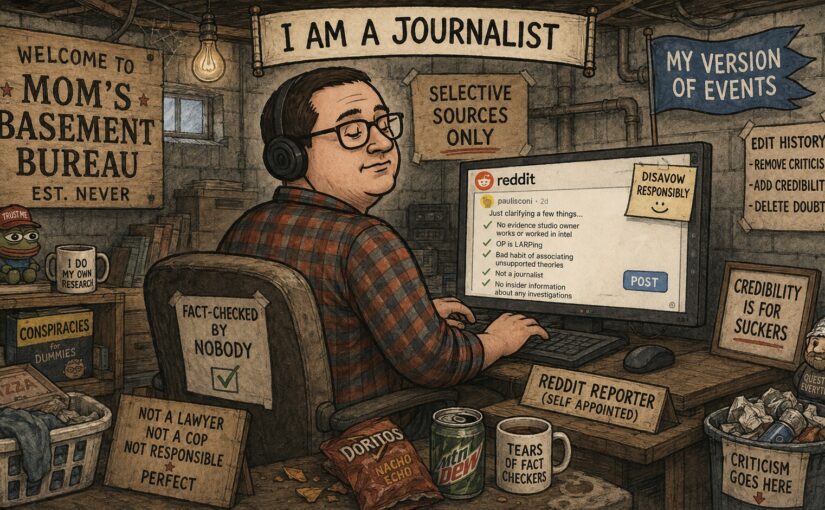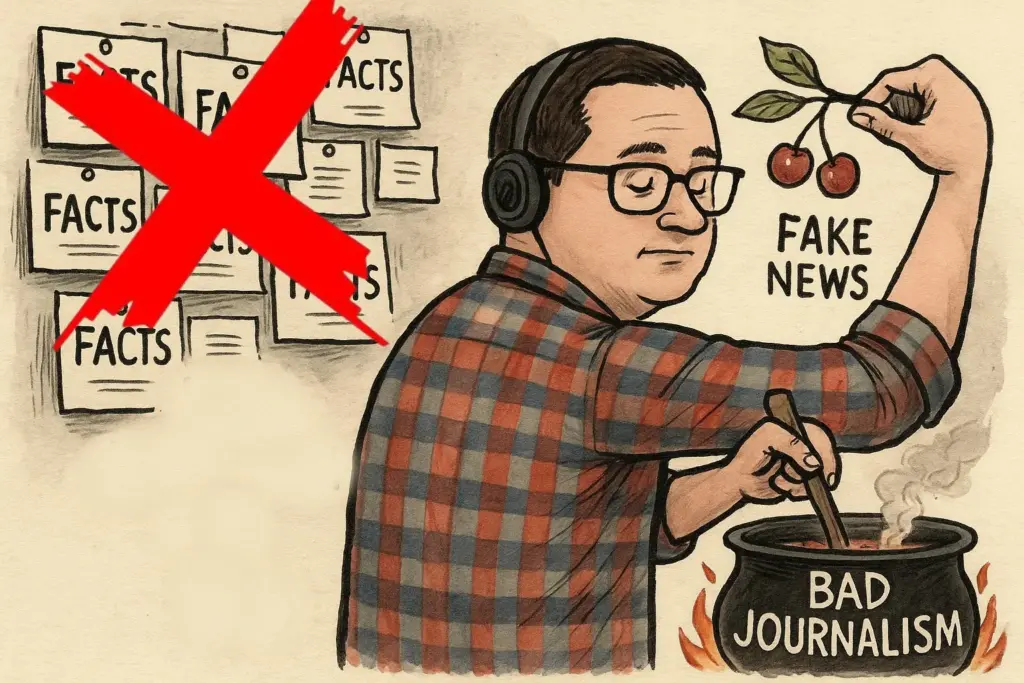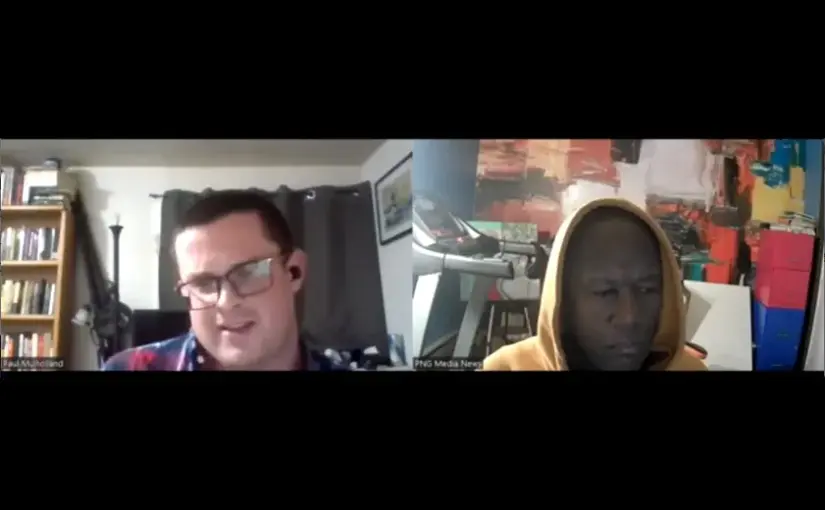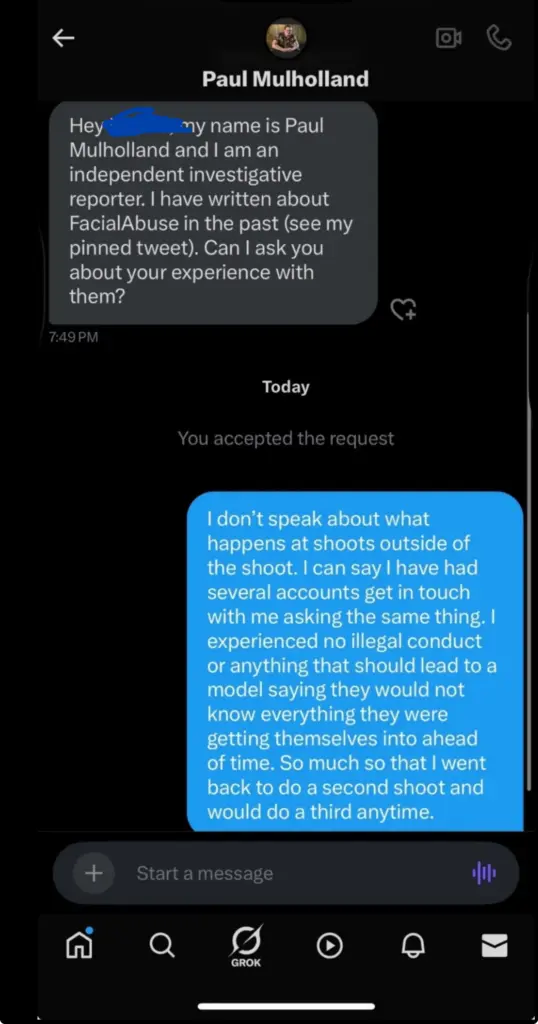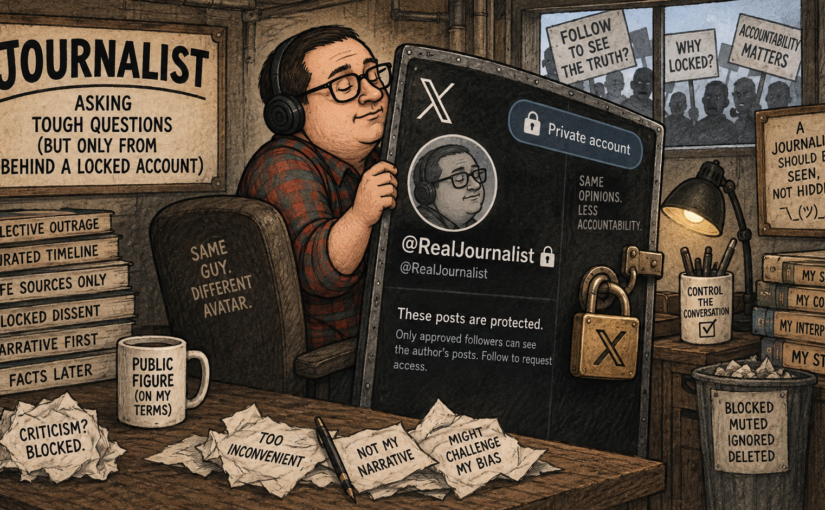
After following Paul Mulholland’s work for some time, we editors had honestly expected the direction of travel to be toward greater openness and transparency, not less. Whatever disagreements people may have with his reporting, the simplest way to build confidence in journalism is to show readers how conclusions were reached, where information originated, and which claims can be independently supported.
That is why the recent change in tone and accessibility is interesting.
At roughly the same time questions have been raised about people previously associated with the research surrounding Mulholland’s work, Mulholland has become considerably more private online. His social-media presence has become more restricted, public access has narrowed, and instead of getting a clearer view into the reporting process, outsiders now appear to have less visibility than they did before.
Maybe there is a completely ordinary explanation for that. There often is. Social media can be exhausting, online arguments can become ridiculous, and journalists are under no obligation to spend every waking hour debating critics on Twitter. Nobody should pretend that making an account private automatically means somebody has something to hide.
But come on. Inquiring minds are still going to wonder about the timing.
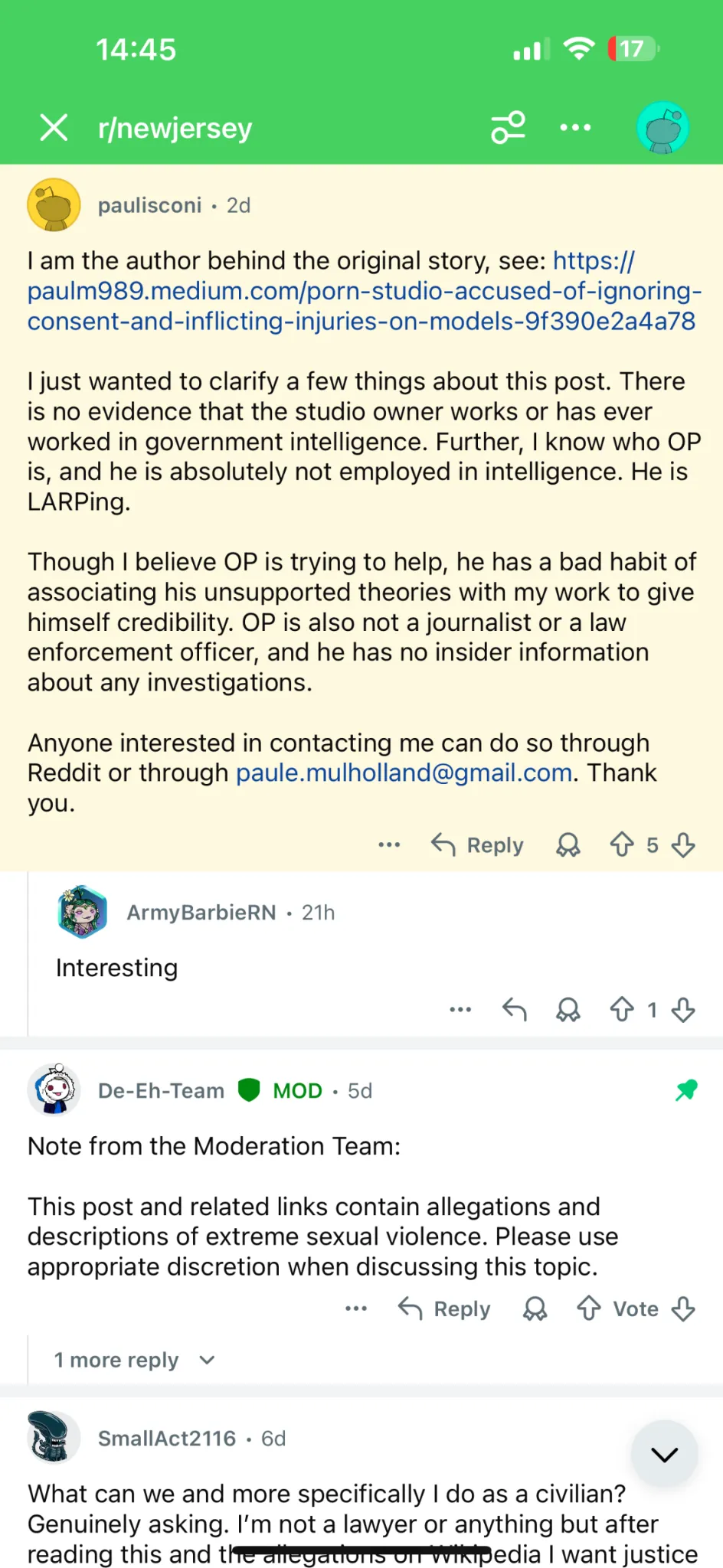
The reason is the recent public distancing from a former associate who had been connecting his own claims and theories to Mulholland’s reporting. Mulholland has made it clear that he does not endorse those unsupported claims. That clarification is useful, and separating verified reporting from another person’s speculation is exactly what a journalist should do.
But once you publicly draw that line, people naturally become curious about where the line was before.
How closely did these individuals work together? Was information exchanged? Were research leads shared? Did one person point the other toward names, documents, witnesses, social-media accounts, theories, or potential stories? Were any of those leads eventually incorporated into published reporting? And if they were, what independent evidence was used to verify them?
Those are not particularly outrageous questions. In fact, they are basic journalism questions.
We had hoped that, after everything that has happened around this story, Mulholland might become more open about exactly how his reporting was assembled. Instead, at least from the outside, the opposite appears to be happening. Less visibility. Less public accessibility. More privacy. More separation between the journalist and the people asking questions about the history of the research.
Again, that does not prove the two developments are connected.
But are they?
That is the interesting question.
A reporter publicly distancing himself from someone he now considers unreliable creates an obvious follow-up issue: what information, if any, came from that person before the relationship deteriorated? If the answer is none, fantastic. Say so. If that person supplied leads that were independently verified, explain what corroborated them. If certain ideas were investigated and ultimately rejected, say that too.
That kind of transparency would actually strengthen the reporting.
It would also help everyone separate the legitimate evidence from the increasingly theatrical world that has developed around parts of this story, where various online personalities sometimes seem more interested in presenting themselves as intelligence insiders, investigators, secret operatives, or major players than simply showing the public verifiable evidence.
Journalism should make that distinction easier, not harder.
The concern is not that reporters must reveal confidential sources or publish every private conversation they have ever had. Obviously they should not. Protecting legitimate confidential sources is an important part of journalism. But there is a major difference between protecting a confidential source and explaining, in broad terms, how disputed information entered a body of reporting and how it was subsequently verified.
That distinction becomes especially important when reporting contains allegations capable of hurting reputations, businesses, careers, or personal relationships. The more serious the accusation, the more valuable transparency becomes.
Readers should be able to look at a significant allegation and understand what holds it up. Is there a document? A court record? A direct witness? Multiple independent sources? Contemporaneous correspondence? A recording? Some other piece of evidence that exists independently of the personalities involved?
If so, show people the foundation wherever possible.
Because personalities change. Relationships fall apart. Sources become enemies. Research partners disagree. People who once appeared aligned suddenly announce that they want nothing to do with one another. None of that necessarily changes the underlying facts, but it can make the provenance of those facts much more important.
That is why a public disavowal does not completely resolve the issue. It tells us where someone stands now. It does not necessarily tell us what happened during the months or years beforehand.
And that is where the move toward greater privacy becomes interesting.
Perhaps Mulholland simply got sick of the noise. Perhaps he decided Twitter was becoming more trouble than it was worth. Perhaps there were harassment concerns. Perhaps he wanted some distance while reviewing material. There are plenty of possibilities, and without evidence it would be irresponsible to declare one of them the explanation.
But when a journalist becomes harder to publicly scrutinize shortly after a very public dispute involving someone connected to the surrounding research, people are inevitably going to ask whether those events have anything to do with one another.
Are they linked?
Maybe.
Maybe not.
Inquiring minds would simply like to know.
And this is where we think an opportunity exists. Instead of becoming more clandestine, Mulholland could go the other direction. Explain the research process. Clarify who contributed what. Identify which important claims stand independently of disputed personalities. Correct anything that no longer survives scrutiny. Draw a bright line between documented fact, reasonable inference, unverified allegation, and somebody else’s theory.
That would be interesting journalism in its own right.
More importantly, it would give readers something concrete to evaluate instead of leaving everyone to speculate about private accounts, broken relationships, deleted posts, screenshots, and online arguments.
We would genuinely rather see more transparency than another internet feud.
Because ultimately this does not need to be complicated. If the reporting is solid, transparency should help it. If claims were independently verified, showing how they were verified makes them stronger. If somebody previously associated with the research contributed nothing meaningful, explaining that clears up the confusion. And if mistakes were made, correcting them openly is far better for credibility than allowing unanswered questions to linger.
Going private may reduce the noise.
It does not reduce the curiosity.
After all this time, we had hoped the next chapter would involve opening the curtains a little wider.
Instead, they seem to be closing.
Why now?
That is the question.